
I Just Bought This PLANT … The Dutchman's Pipe Vine
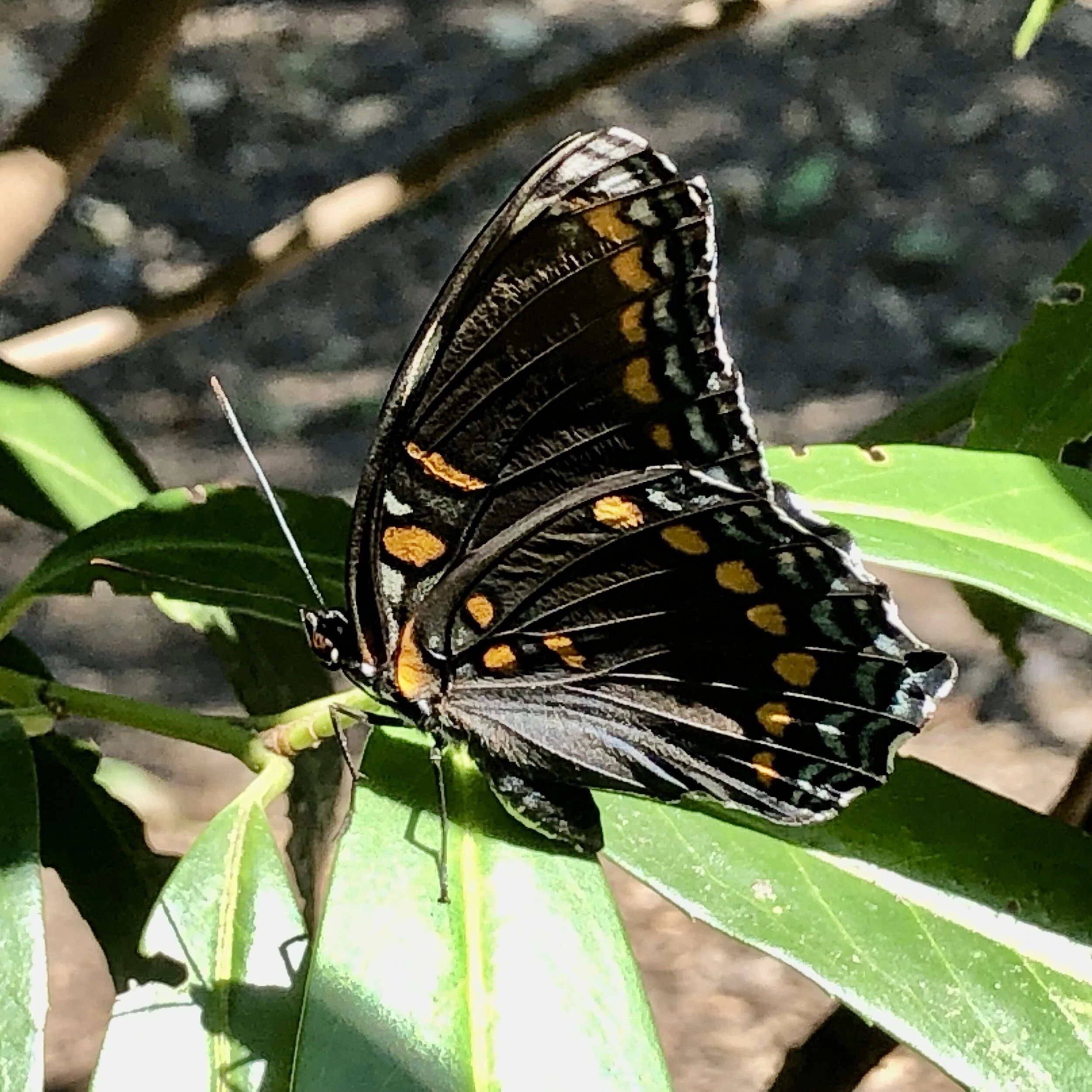
I bought the Dutchman’s Pipe Vine because it is the host plant for the Pipevine Swallowtail, which is an unbelievably beautiful iridescent-blue butterfly. Being a host plant for such a beautiful butterfly, I definitely want in my garden...
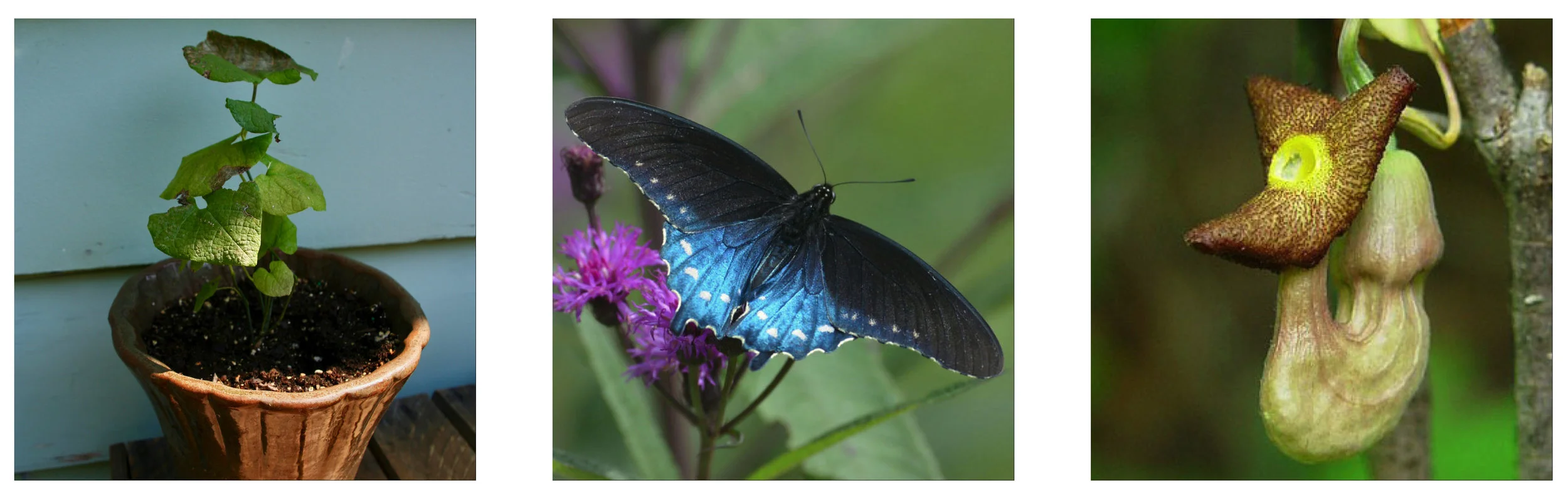
Dutchman's Pipe Vine - A Butterfly Plant
It came in the mail from Hirt’s Gardens in Medina Ohio. It is a Dutchman’s Pipe Vine. I bought it because it is the host plant for the Pipevine Swallowtail, which is an unbelievably beautiful iridescent-blue butterfly. Being a host plant for such a beautiful butterfly, I definitely want in my garden. It is a fast growing vine that gets up to 35’ so I need to find a good spot for it.
Dutchman's Pipe
The flower does look pipe like… but the latin name, Aristolochia, is much more interesting; who ever named it thought the flower looked like the best (aristos) human fetus (locheia). I tend to agree with the latin name, at lease as it refers to the human body because you don’t see this flower and not feel a little weird, like you should turn away.
Butterfly Plant - Attracting Butterflies
To attract butterflies you need to provide a ‘host’ plant and a nectar source. The nectar source is easy, most native perennials will do, but especially Penstemon, Liatris, Monarda, Eupatorium and Asclepias. These will do as food source for most butterflies. But they get fussy about where they will lay their eggs.
The Pipevine Swallowtail will only lay her eggs on the underside of the Dutchman’s Pipe Vine leaves. Once hatched, the caterpillars feed on these leaves. They overwinter as a chrysalis and emerge in the spring.
The North American Butterfly Association’s website, www.naba.org, can help you out with host and nectar plants. Once you know the plants you need, plant lots. One or two won’t do. Plant masses. Especially for the host plant.
Next I am going to increase my Milkweed numbers and help out the Monarchs. They cannot survive without Milkweed. Butterfly Milkweed, Swamp Milkweed, and Common Milkweed. Its where they lay their eggs, and the caterpillars feed. And it is a nectar source for many other butterflies as well.
Supporting butterflies and other pollinators not only brings beauty to your garden, it supports their usefulness as pollinators for our food crops.
Do you have a Dutchman’s Pipe Vine in your garden? Is there anything you would like to add or questions you would like to ask? You can do so in the comments just below this post!
Read more about my new sustainable landscapes blog HERE.
Carolle
Keep up-to-date with my garden and projects on Instagram







Sustainable Landscapes - An Intro To Me, Carolle Huber And My Blog
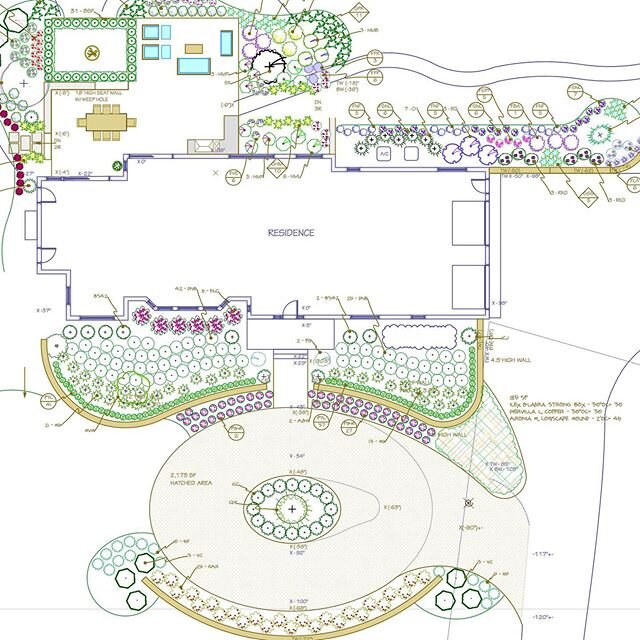
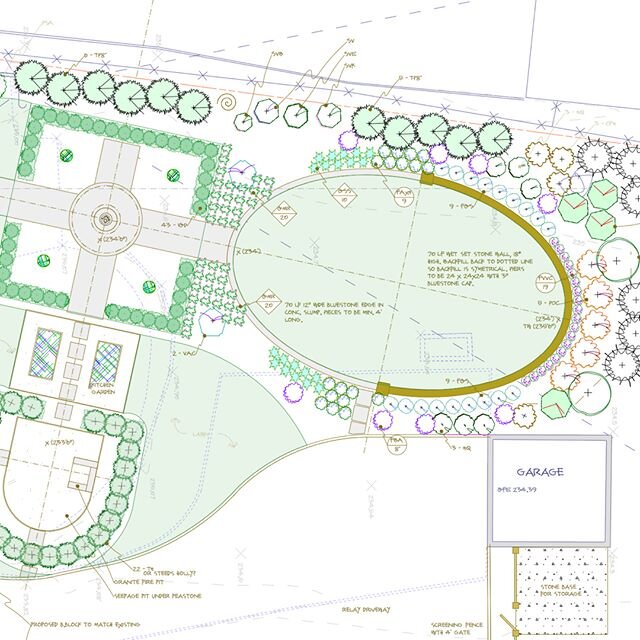
Designing and implementing sustainable landscapes for 30 years. I have noticed a dramatic increase in the willingness of my clients to install healthier eco landscapes. I am delighted to introduce myself, my home and tell a little of my story in my very first of a long line of blog posts, all of which I hope will help and inspire…
Several years ago, heading to a favorite hike with family, we passed a pull off in the road we had walked past tons of times. There was some road construction that had just been completed and the Public Works Department landscaped a small disturbed area near the pull off. I’m not sure what the impetus was to landscape a tiny area off a country road in the middle of no where, but it can be a busy road during hiking season. The planting was a small Blue Spruce and two Japanese Barberries. Walking past I exclaimed my dismay to my hiking party, my then 15 year old daughter Ruby, my sister and three niece’s. I told them about the problems exotic invasive like barberry are causing our ecosystems. The girls were incredulous! They understood! Then they said we needed to pull the barberry out and save the woods. That night, after we purchased some Native Blacks-eyed Susan’s (Rudbeckia fulgida), we plotted our assault. At dusk, dressed all in black, we waked back up the road. We removed the Barberry and planted Rudbeckia in its place, never having to use plan B, which involved diving into the woods when our lookout spotted a car. Illegal… possibly. Immoral…hell no. Those plants are thriving today, and I think not only was it was a great lesson to share with our next generation of environmentalists but it sparked a passion for sustainable landscapes…
Sustainable Landscapes to Inspire - My home
In New Jersey, I have a typical 1920’s suburban lot. 50’x100’. It is small, manageable and alive. I say this with pride, because 18 years ago when we purchased the dilapidated home, there was one boxwood in back, and several Japanese Barberry in front, which, for reasons you will learn soon enough, I pulled out even before we moved in. And yes, I have a bit of the shoemakers daughter syndrome. My gardens are not always good models of great design. I bring too many plants home to try out. I sometimes don’t water enough, and I certainly don’t pull weeds enough. I have come to realize that’s OK too.
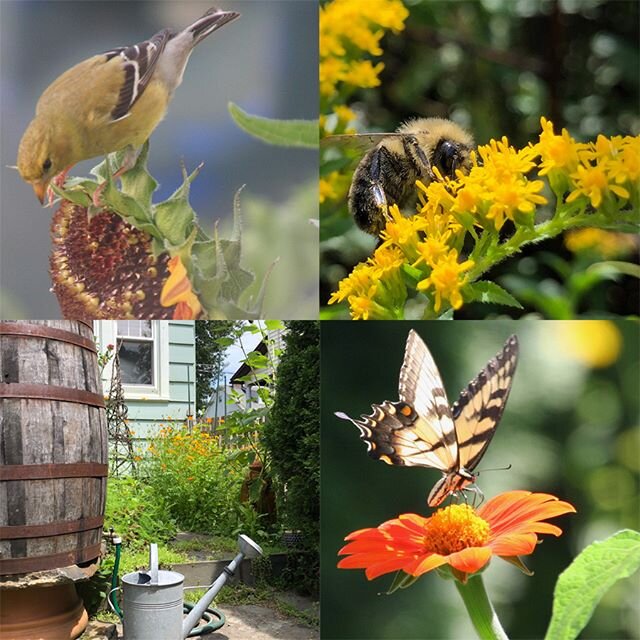
I have a home office, and whenever I need a break, a short time spent in my backyard always calms me. I love to see who is visiting my garden each day. I grow sunflowers outside my office window so I can watch woodpeckers on the nodding heads, pulling out seeds as they both sway.
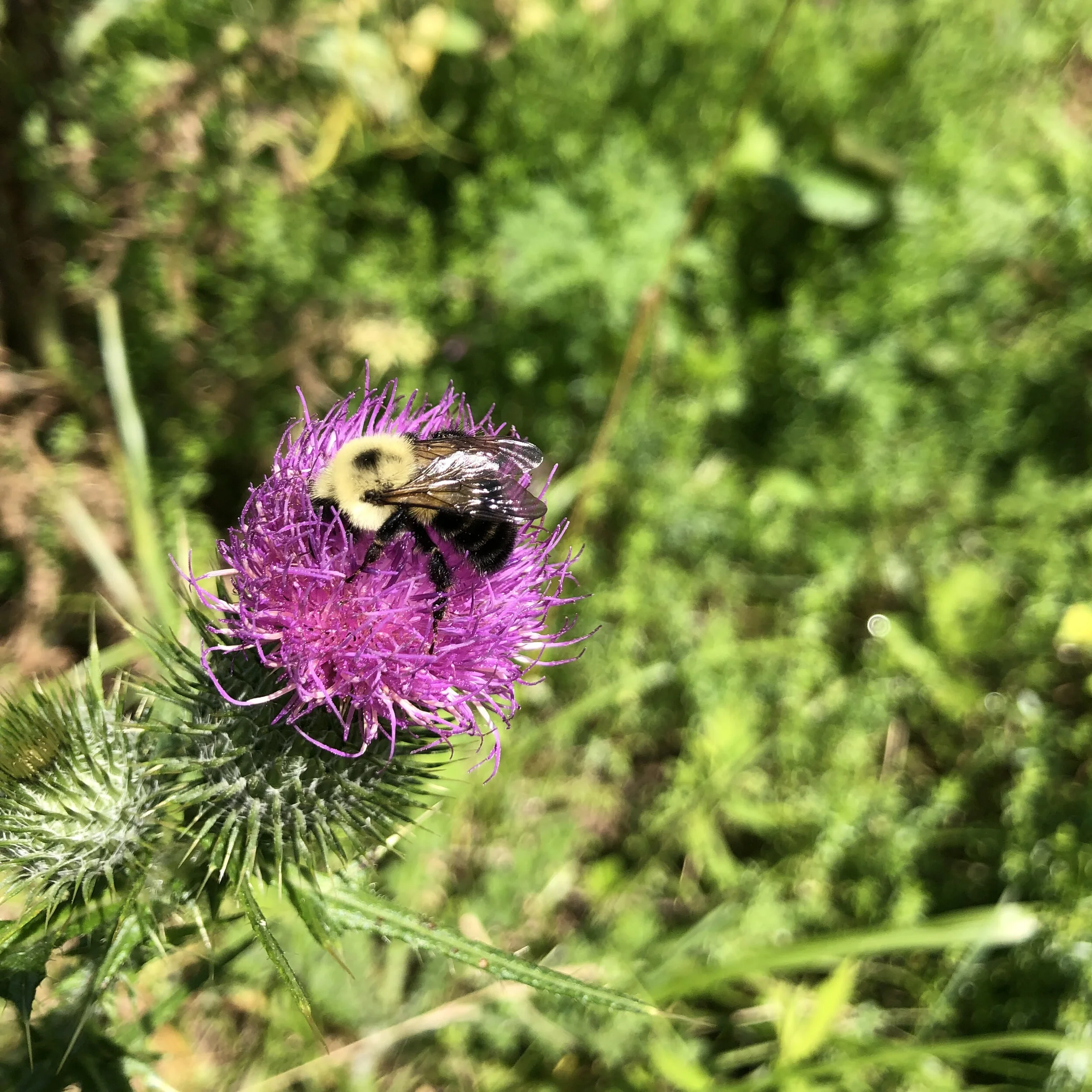
Dried coneflower seed heads are Goldfinch magnets, and butterflies I don’t even know the names of visit my bee balm all summer.
Connecting with nature, even in small ways, benefits us. It calms and focus’ our minds and lowers stress levels. When my husband Max comes home from work in the summertime, before he even comes into the house, he sits for several minutes in front of his bee hive. Watching the bees coming home laden with pollen is calming. Sometimes they are so over loaded these girls almost seem drunk on pollen, crashing down towards the door like a tipsy pilot barely able to navigate from the weight of it.


Sustainable Landscapes that Inspire - My Story
I have been designing landscapes for 30 years. In the last few years I have noticed a dramatic increase in the willingness of my clients to install healthier, sustainable landscapes. The plants in our garden, or any garden or woods for that matter, perform what we call ecosystem services. They protect our watersheds, cool and clean our air, enrich and stabilize the soil we grow our food in, and sequester carbon. Whatever we do, in addition to doing less damage, lets reverse some of the damage that has already been done. It really is this simple: We are all connected. Everything we do has an effect on others. What we need to do is to remember this phrase every time we have a decision to make. I try to reflect on this each time I prepare a landscape plan. Let's plant more native plants. Let's do better storm water management – with rain gardens and green roofs, and let's tread more lightly on the earth. Let's plant more trees. It is easier than you think.


And once you have a more natural or ‘greener’ landscape you will be rewarded with more life in your back yard, more birds, butterflies and other pollinators, more wildlife in general.
I hope you have enjoyed this introduction to my sustainable landscapes blog, this is the very start of lots more to follow from me.
You can check out some great examples of my landscaping projects right here.
If you have any questions or comments to add, I would love to hear so please do so just below.
Carolle