Banning Chemicals From My Garden
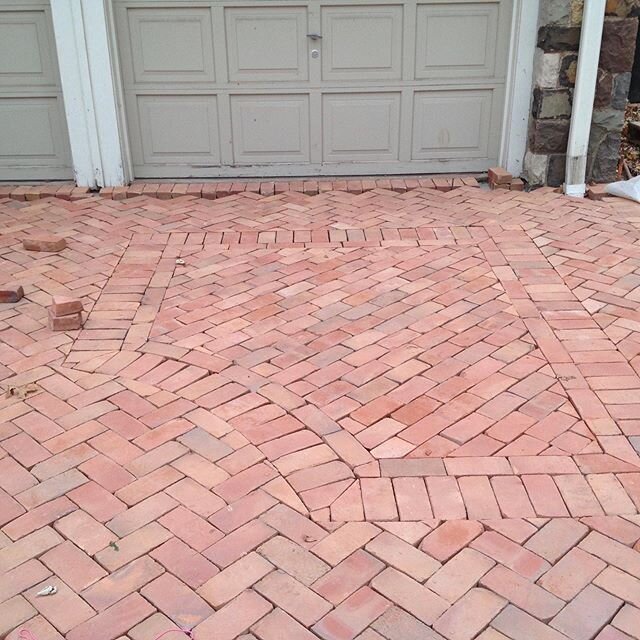
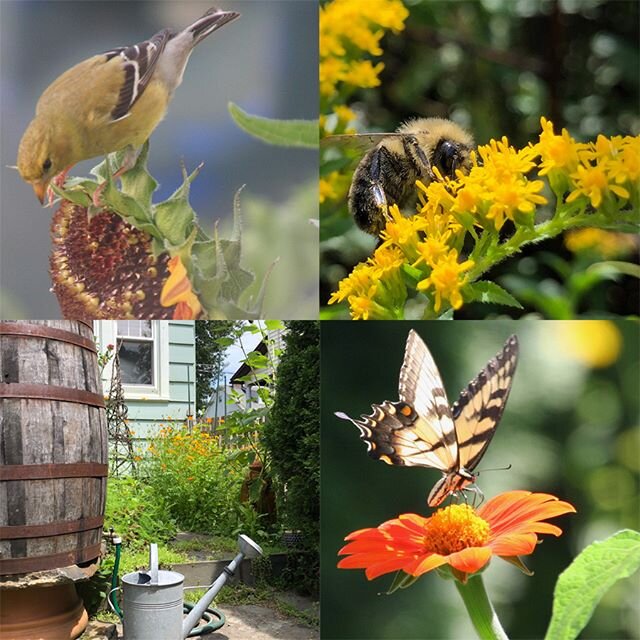
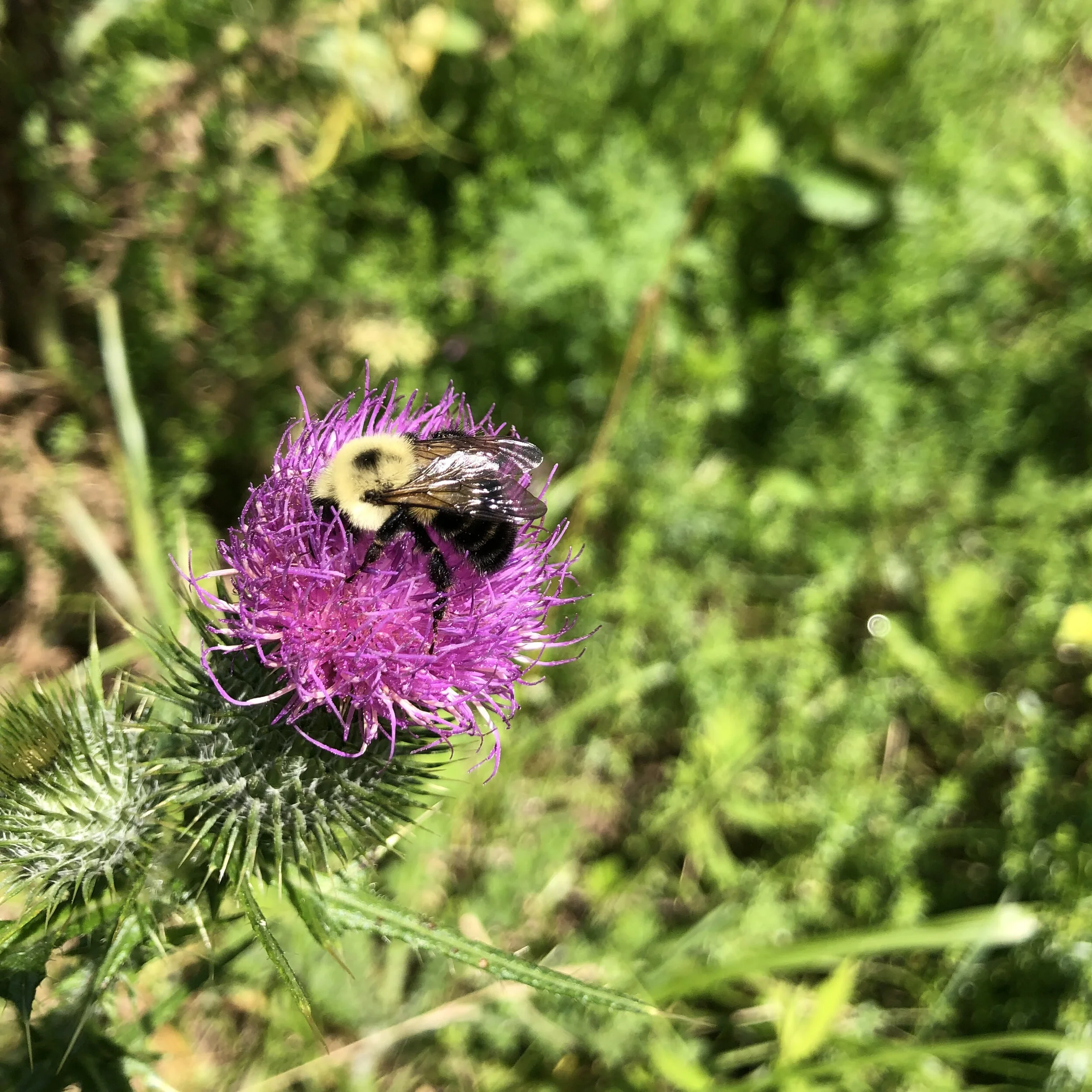
I’m not sure how you feel about a ban on chemicals in your garden, but there is no place for chemicals in my yard. We are always barefoot on our lawn, we have a dog and honeybees. The lawn is green, but certainly not weed free. I try and pull out the most annoying weeds, usually after a good rain. Purslane, creeping ivy. If there is a spot where the lawn does not do well, I plant white clover. I fertilize my beds with compost and mulch. What was once almost impossible to dig in is now black and rich with worms and easy to work. If I were to spray any leaf with an insecticide, I’d risk loosing my whole bee hive, so we live with some bugs. For some, spraying them with a soapy mixture usually does the trick, but actually those aphids are hummingbird food so I usually let them stay. It is a bad idea to expect and want a perfectly manicured, bug and weed free landscape. I spray the weeds between the cracks of my brick patio with a vinegar blend I mix up. It works almost as well as Glyphosate (the main ingredient in RoundUp), and, like RoundUp, is not linked to cancer. In October 2018, a Northern California judge upheld a previous verdict that found that Monsanto’s weed killer Roundup caused cancer. The plaintiff was awarded $78 million.


Ban Chemicals From Your Garden - The Effects Of Glyphosate
Glyphosate works by blocking an enzyme pathway that allows plants to form amino acids, the stuff they need to grow. It also keeps them from taking up the nutrients they need from the soil. It weakens the plant. It does the same to your dog. While we all now have trace amounts of Glyphosate in our urine, our pets have up to 5,000% more. This dramatically increases their chances of getting lymphoma.
Living Landscapes
The sooner we can collectively wrap our heads around the idea of a living landscape, the better off we all will be. We must understand the impact of our actions, in our lives and in our gardens. Just as we continue to strive for wellness in our bodies, so should we in our built environment by banning chemicals from our gardens. I believe we need to treat our world better. I know it will return the favor.
If you have any questions or anything to add please comment below. I would love to hear!
Carolle