
Suburban Ecology : A New Year's Resolution for a Healthier Planet
Now is the time to think about increasing the biodiversity of your suburban lot to support the vitality of Nature in your own corner of the world. Residential landscapes occupy almost one-fifth of the entire United States, so how we manage our yards has a large effect on the health of our planet.
Now is the time to think about increasing the biodiversity of your suburban lot to support the vitality of Nature in your own corner of the world. Residential landscapes occupy almost one-fifth of the entire United States, so how we manage our yards has a large effect on the health of our planet. What can you do this year to make your own plot friendlier to our small friends who want to thrive there? I’ve got a few ideas and resolutions for a healthier planet. Don’t feel overwhelmed; pick out 3 from my list below and make 2020 your year to make a difference in the health of the Earth.
Resolutions for a Healthier Planet
1- Have A Landscape
No kidding. No matter the size of your property or terrace, have some plants other than grass. Plants have many benefits. They absorb carbon dioxide and release oxygen, they shade and cool our neighborhoods, and they reduce dust, filter water, and prevent erosion. If you have no yard, plant in pots.
2- Get A Compost Bin
Whether you build one or buy one, start composting your food waste. It’s great for your soil and conserves landfill space. Once it is ready, use it as mulch, soil amendment or organic fertilizer for your plants. Chop your scraps up for rapid composting. Match your food scraps 1 for 1 with dry brown stuff like leaves, sawdust or newspaper. When its done it should smell earthy and sweet.
3- Conserve Water
Install a rain barrel or two. Use this water for potted plants or landscape beds. You can fill up watering cans, or run a soaker hose from its spout into your landscaped beds. Water is a resource to use carefully. For each inch of rain collected from a 500 sf roof area, you can collect 300 gallons of water! I’m adding a second on this year, the first one has been so successful. I am partial to wood whiskey barrels.
If you have an irrigation system, inspect it regularly to see that heads are irrigating the landscape and not the driveway. Install a rainfall sensor that will shut the system down if it rains.

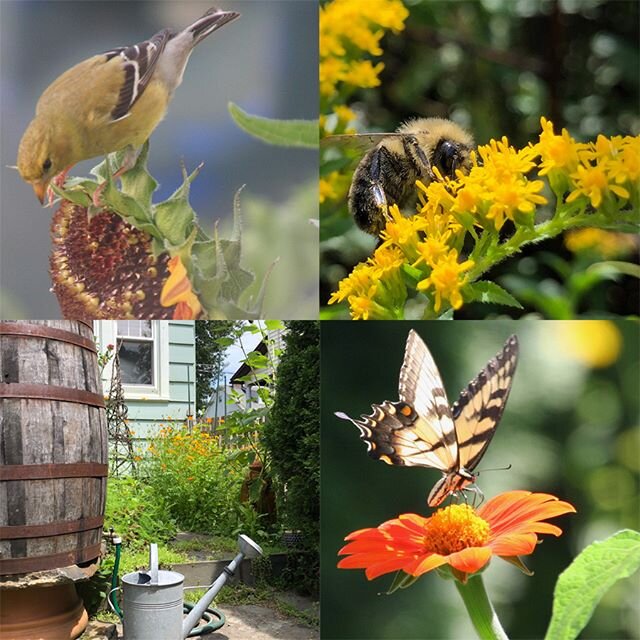
Resolution for a Healthier Planet - Wood whiskey barrel to collect rain water for the yard.
4- Create A Habitat For Wildlife
A great resolution for a healthier yard is adding plants to mimic wild areas. Layer shade trees, small trees, shrubs, perennials and ground covers that are attractive to pollinators. Here, birds can find food, shelter, and nesting sites. A birdbath helps too. I got a bird bath coil this winter to keep the water from freezing. It turns off when the temp is above freezing and costs just pennies a day.
5- Do Better Lawn Care
Switch to organic fertilizers for your lawn. Use a mulch mower and leave grass clippings on the lawn; they supply needed nutrients and help keep weeds at bay. Mow high and frequently, and never cut off more than ⅓ of the grass blade. Mowing high helps prevent weeds and crabgrass and encourages deep roots, which helps on hot summer days.
6- Hang A Bird Feeder
Two-thirds of North America's birds are at risk of extinction due to climate change. Too many suburban landscapes are over-maintained; plants get cut back in fall and removed, along with all their seeds, and leaves are blown away, taking with them all the insects that might have overwintered there. Planting the right plants to provide food for birds in spring, summer and fall, along with supplemental feeding in winter helps a lot, especially now that our winters last longer. Make sure to clean feeders thoroughly a few times throughout the winter, so you don’t help spread viruses. I hang suet for woodpeckers, and feed only sunflower seeds to greatly reduce wasted seed. If you don’t like the seed hull mess, try the shelled seeds. They are more expensive, so I switch to them late winter, when I am actively in my yard again and don't want the mess.

Planting the right plants to provide food for birds in spring, summer and fall -
A New Year's Resolution for a Healthier Planet
7- Leave The Leaves
In fall, mow over fallen leaves and leave them on your lawn or rake them into your landscape beds as winter mulch. As they deteriorate, they will improve your soil and provide nitrogen, phosphorus and potassium without expensive chemical fertilizers. They also serve as winter insect habitat, helping declining bug populations survive. If you have extra leaves, add them to your compost bin.
8- Install A Bat House
Bat numbers are diminishing because of habitat loss and disease but a bat house provides a safe place for these under-appreciated winged rodents to roost and raise their young. And you want them in your yard because they eat thousands of insects each night, so goodbye mosquitos! And they are also pollinators on the night shift. My husband Max made me one out of scrap lumber from pallets, which are usually available for free and the wood is untreated. Perfect.
9- Sign Up For A Community Garden Plot
Grow organic vegetables to feed your family, relieve stress, and rub shoulders with the diverse people that are your community. Add your name to the wait list for Grow It Green Morristown’s Early Street Community Garden and start planning your garden now.
10- Learn Weeds
I have been learning to identify weeds this year and still have a long way to go. But it has helped me to know which weeds or wildflowers are native, and which are not; which ones I pull and what I leave alone for the native insects to enjoy. A great site is Rutgers NJ Weed Gallery. My favorite phone app is PlantNet.
11- Rethink All That Lawn
Get rid of some of your lawn. Lawn uses a lot of resources, water and fertilizer. Do you use all of your lawn, or could some of it be put to better use as a vegetable or pollinator garden?
New Year's Resolutions for a Healthier Planet - What will you do this year? Let me know!
Learn more about me Carolle Huber and the inspiring sustainable landscapes that I design here.
Carolle







Trail Maintenance In The Catskills
I’m clearing and cutting in the woods, doing trail maintenance behind my house in the Catskills. Some shoots in the path are three feet high which tells you how long it’s been since I’ve done this. Beech trees grow up from the roots that extend across the path, and some of the original trees may have already died. This is the way beeches prolong their life. They find a patch of sun and the meristem (basically the “stem cells” of plants), dormant for many years can shoot up and create a whole new tree. Or not a new tree but the same tree in a different location. When I’m with 12-year-olds, I call them, “Sons of beeches.” They’ll never forget, and maybe think plants aren’t so boring after all.
I’m clearing and cutting in the woods, doing trail maintenance behind my house in the Catskills. Some shoots in the path are three feet high which tells you how long it’s been since I’ve done this.
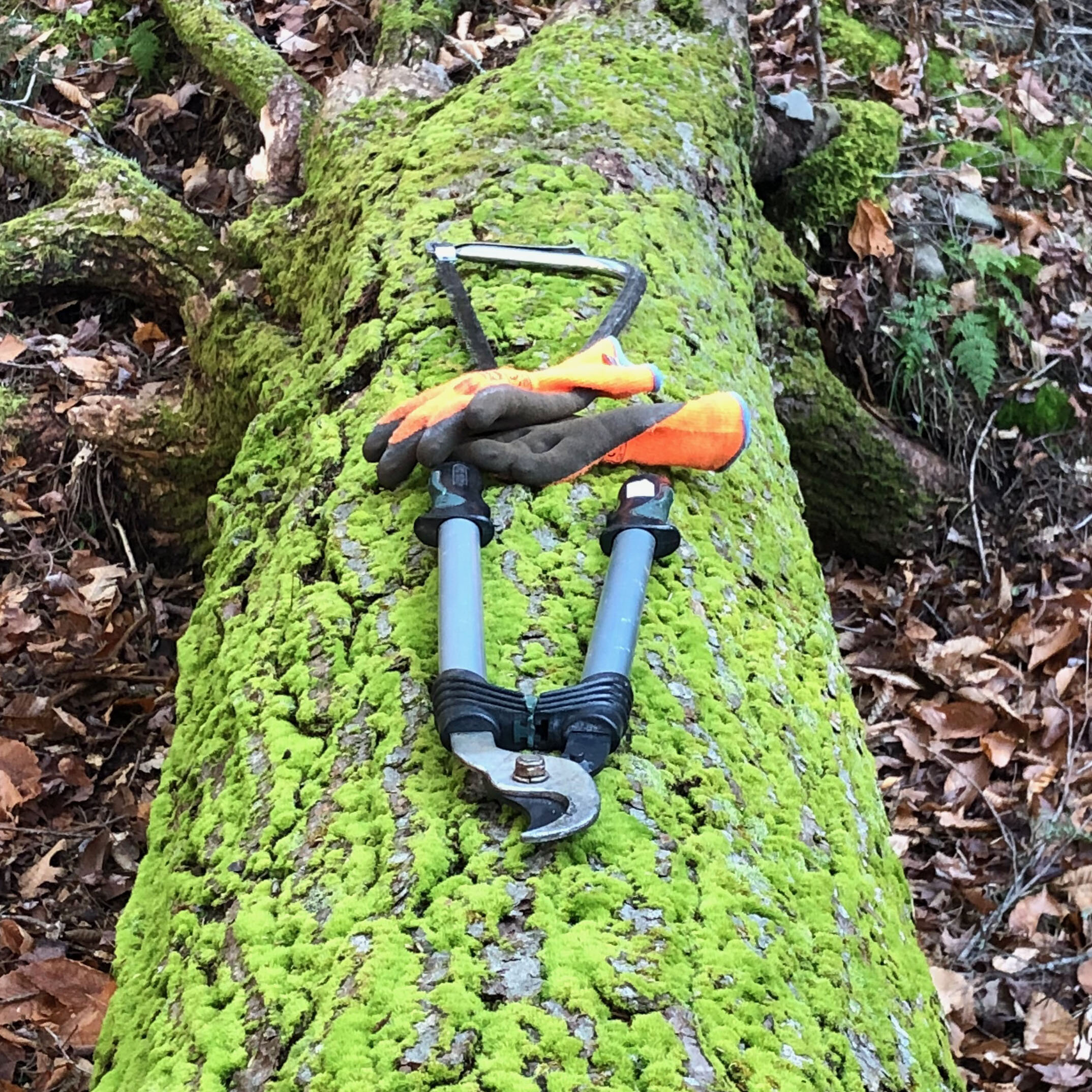
Tools For Trail Maintenance In The Catskills
Beech trees grow up from the roots that extend across the path, and some of the original trees may have already died. This is the way beeches prolong their life. They find a patch of sun and the meristem (basically the “stem cells” of plants), dormant for many years can shoot up and create a whole new tree. Or not a new tree but the same tree in a different location. When I’m with 12-year-olds, I call them, “Sons of beeches.” They’ll never forget, and maybe think plants aren’t so boring after all.
I have friends, Patti and Bill, who maintain the nearby Rochester Trail. But I am doing this for purely a selfish reason: so I can get to the river easier.
Different Species In The Catskills
My dad, son of an English professor, would know the names of all these trees. But after cutting away three downed branches, he would sit down to muse about the place or its history. My mom, daughter of farmers, would not know or care for the names of these plants, but would love to see all the green moss popping up through the leaves and hear the grouse drumming in the distance. She could do this type of work for eight hours without stopping.
And then there is me, I guess a little of both. If I don’t know a plant’s name, I take a picture with my phone so I can identify it later (PlantNet is my current favorite App). I love botanical names. I know the Latin names of all the plants for sale in nurseries. I love what the names tell us about the plants. Take Witch-hazel: Hamamelis virginiana. The first word (or genus) comes from the Latin hama, meaning “at the same time,” and melon, meaning fruit. This small tree fruits and flowers at the same time. And the species virginiana tells us it’s from Virginia—in other words, the east coast.
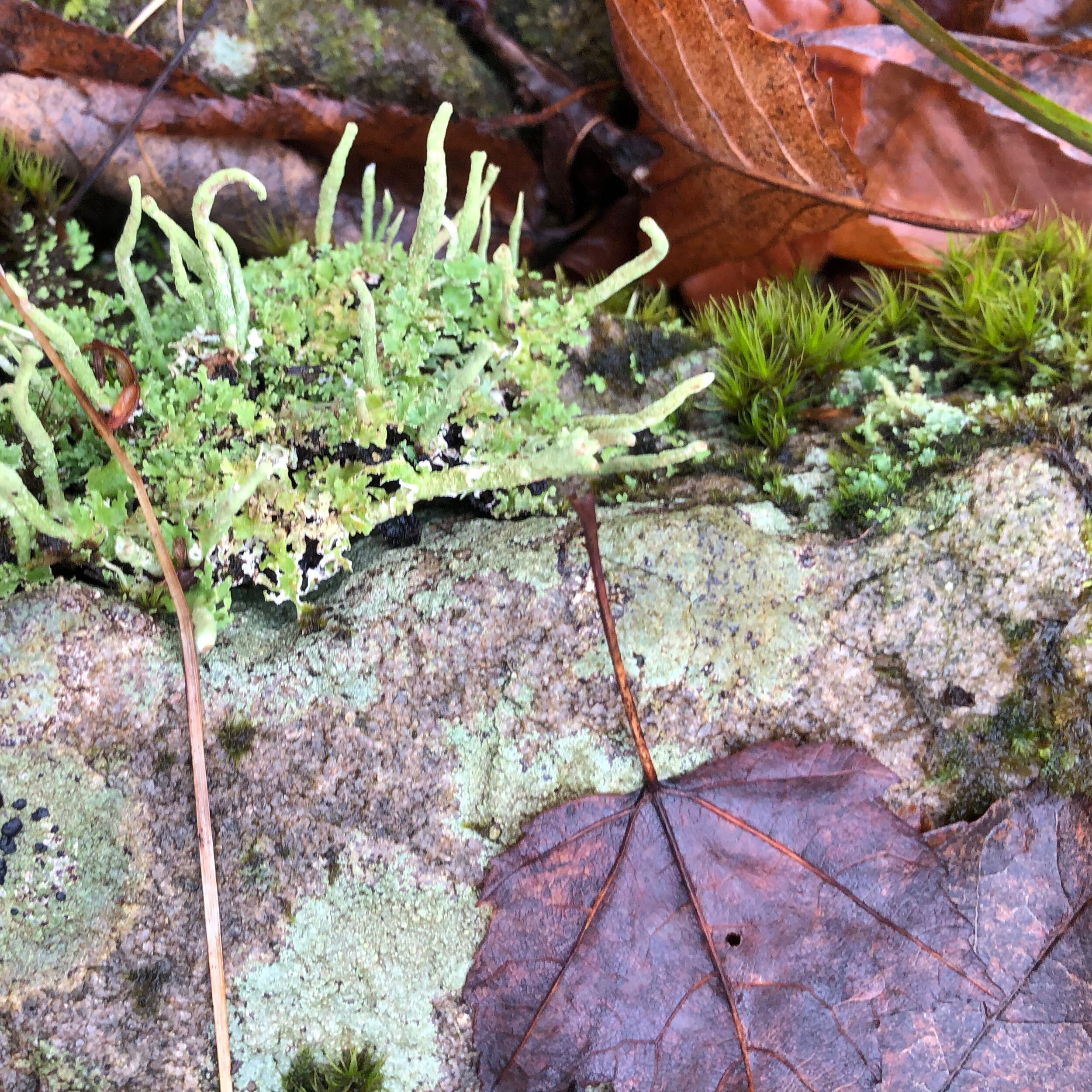
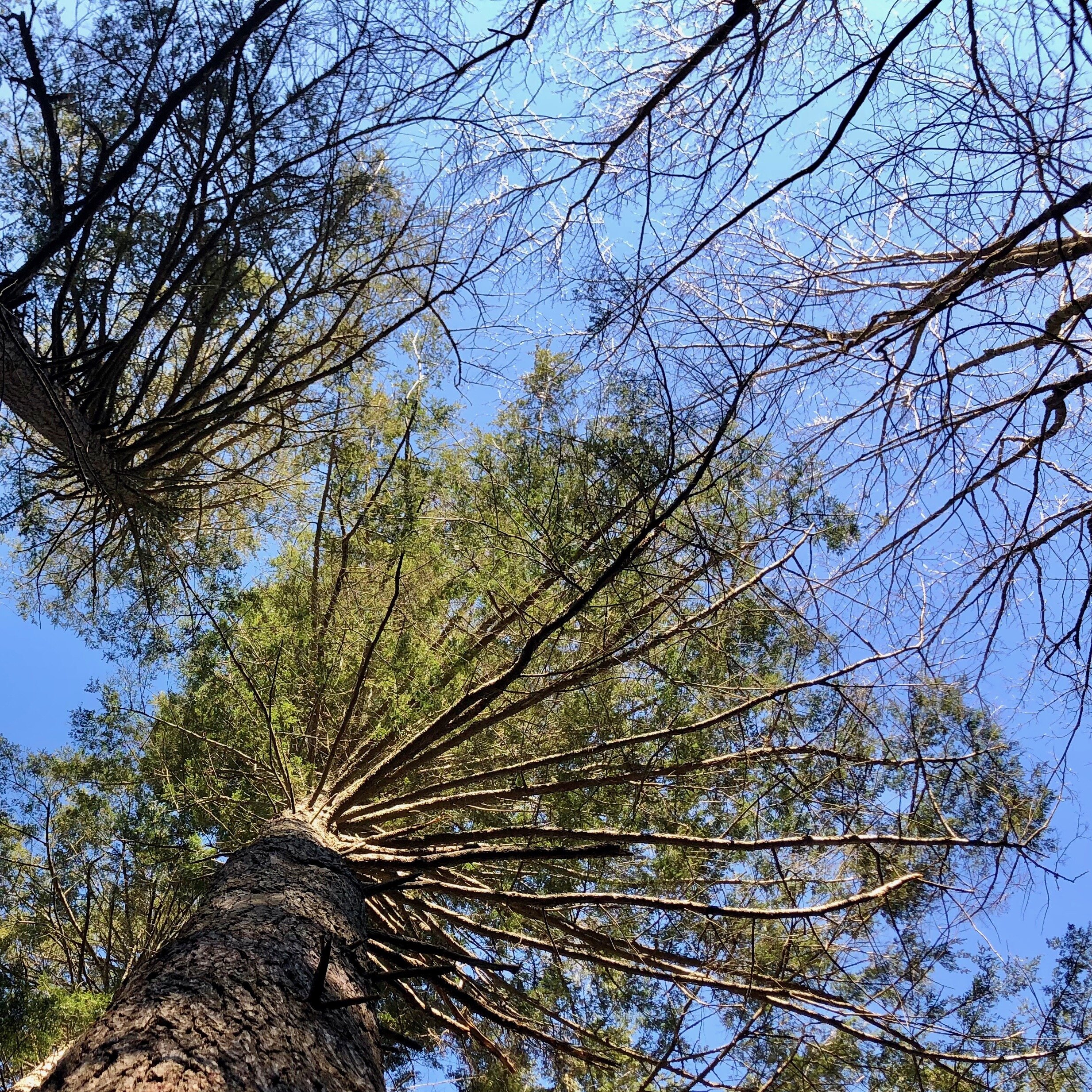
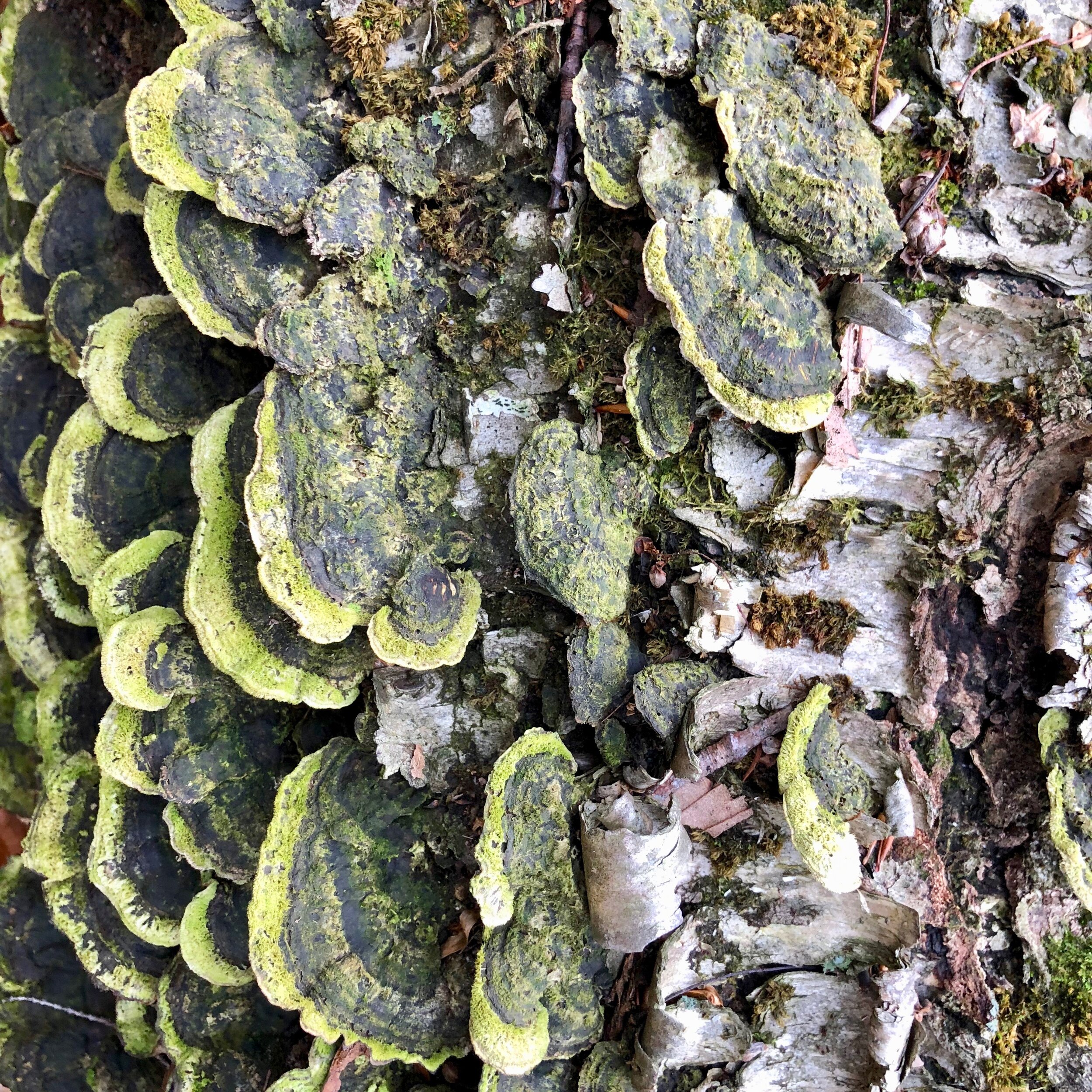
I also like the fact that I can spot from a distance the ‘hops’ of a hornbeam even with all the leaves gone, and the catkins of a birch, and the seed capsules of Witch-hazels which have just finished blooming. But I’m not so good with the smaller local plants. I see moss as moss and mushrooms as mushrooms, but I’m learning to be more curious and have started to learn their names, too. Mushrooms like fan-shaped Turkey Tails on fallen logs, brittle Russula or a Bolete under an oak.
I can keep at this work for hours, too, like Mom, stripping off layers of clothes as I go.
Those of us who like this type of work wear layers as we are told to do in the cold, but not for the reason you think. It’s not to keep us warm, but to take them off. We know that in 40° F weather, after half an hour we’ll take off the first layer, another half hour and the second one is off, and so on.
Being Outside - Trail Maintenance In The Catskills
It’s hard work and it’s easy work, too. Being outside, I’m maybe the only person within half a mile. Me and my dog Garçon. Looking up at the sky, the trees forming a cathedral over me. It’s like going to church and the gym at the same time. Though it’s Thursday, I’d call this Sunday Service.
Some would question why clean I up the woods, since nature made it that way. I am leaving the logs where they are. It is good returned to the earth, and a great place for bugs to get food; but I like things a little tidy so I make giant snags with all the branches I pick up or cut away from the trail, piling them up in spots where they can return as nourishment to the earth but also create nice hiding places for small creatures. I don’t make a pile or snag on what looks like it might be a trail. It’s not a human trail, but someone else; deer, bear or fox. I can see a definite footpath, but barely. And sure, they could go around, but isn’t their life difficult enough already? So why add to that.
Trail maintenance in the Catskills reminds me of where the phrase “you are on rocky ground” comes from. A worn trail quickly becomes a stream in heavy rain, washing away the little bit of soil that was there, leaving a literal pile of rocks to walk on. You have to look down, watch where you step. A little like fighting an uphill battle. It’s not just whatever is uphill that you are battling, but also the hill.
I cut down suckers knowing their meristem, hiding just below the bark, will wait until spring and then start dividing cells to form another sapling. I may or may not get to them next year because I might have something else to do or someone else to tend to.
Making The Right Cut - Trail Maintenance
I know how to make a proper pruning cut, why and where. We call a good cut a “cookie” in the business. It is a perfect, clean circle. But sometimes you can’t do a good cut. The branch that needs to go is too close to another to use a pruning saw, or too upright to the main stem to get your loppers in. Then there are the branches, hanging precariously, stuck on another branch above. I called them “dangling participles” because I like the way it sounds—not because I know what it really is. Something about nouns and verbs. I know that a dead branch dangling above the path is not good grammar either.
While tending to trails, it is not really about the end result but the doing that matters. And in the end, the tender and the recipient both benefit.
If you have any questions or anything to add about trail maintenance in the Catskills please comment below. I would love to hear!
Learn more about me Carolle Huber and the inspiring sustainable landscapes that I design here.
Carolle
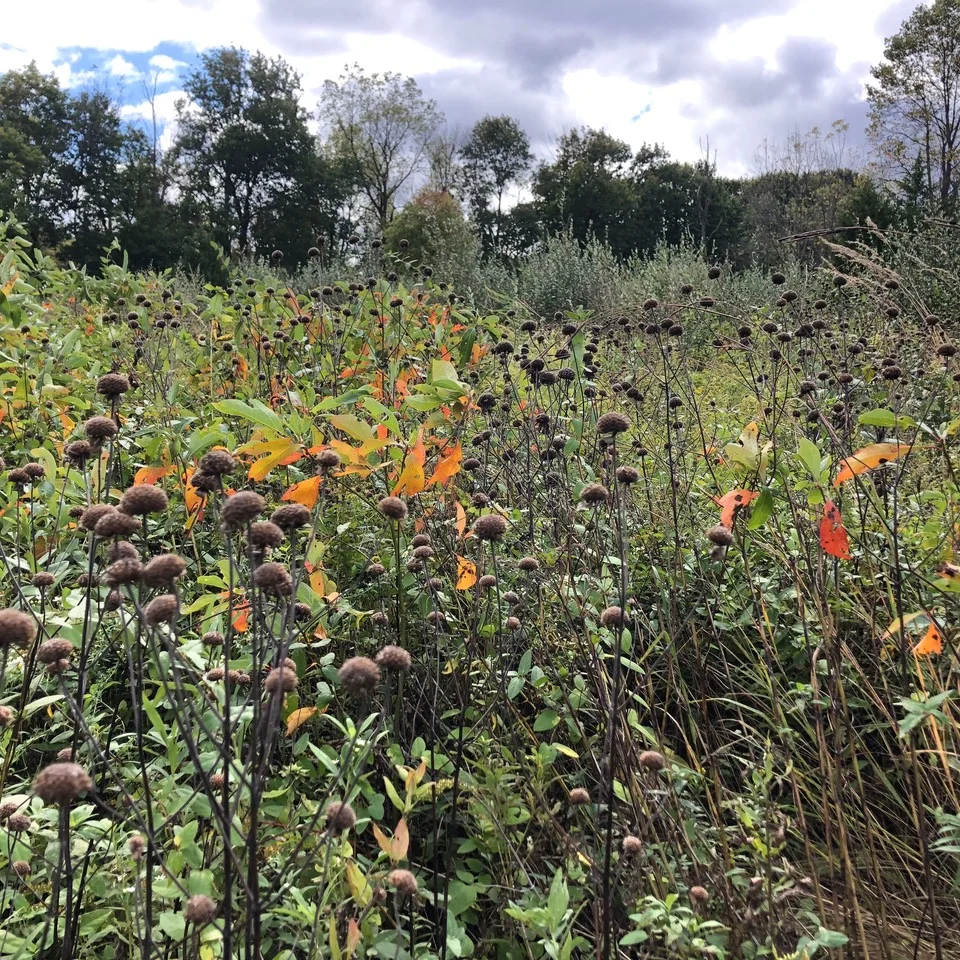
Suburban Ecology - How To Make A Difference With Your Own Yard
What does your home landscape have to do with climate change, species loss and suburban ecology? Plenty. Our home landscapes are mini eco-systems. Ecosystem you say? Yes, that’s the tiny microcosm in your own yard that supports life; the beginning of the food web for insects, bees, and caterpillars up through birds and small mammals.
What does your home landscape have to do with climate change, species loss and suburban ecology? Plenty. Our home landscapes are mini eco-systems. Ecosystem you say? Yes, that’s the tiny microcosm in your own yard that supports life; the beginning of the food web for insects, bees, and caterpillars up through birds and small mammals. (Your yard can also replenish oxygen, sequester carbon, recharge and filter groundwater and moderate weather extremes, but all that for another day.)
Suburban Ecology - What You Can Do
Most of us enjoy our gardens, but there’s a lot you can do to make your garden and landscape more friendly to our ecosystem. You see, the pollinators not only ensure we have food to eat but they also ensure that your shrubs set fruit, which the birds are going to need in the fall. By increasing your backyard biodiversity, you are playing a big role in combating species loss. What this means for our home gardens is that we need to plant more variety and more natives. Eliminating all or most of the lawn in your front yard is also a great way to invite more wildlife to your home. And let’s face it, most suburban front yards aren’t large enough to be useful play areas anyway.

Suburban Ecology - Planting more native plant and flowers
I am a landscape architect with an environmental science background. I love good design, but I want to practice it in harmony with the world around me. At my house we removed our front lawn 20 years ago and heavily planted it. Then we moved to the back and slowly over time, much of my lawn there is disappearing too. As I continually bring home new plants to try out, I inadvertently increased the biodiversity of my own yard. From a sterile green lawn, to a plot with many trees, evergreens, shrubs and perennials. So many layers create many chances for life. My yard these days is teaming with birds, pollinators, and bugs. And I enjoy them all.

Suburban Ecology - One of the many moths in my garden
How We Can Make a Difference With Suburban Ecology?
We are in precarious times, and sometimes feel we cannot make a difference. What can one person do? How can what I do at home make a difference? I’m here to tell you, it can, you can with a little suburban ecology. While we wait for the politicians to do nothing, we can each do something that, collectively, is a lot.
For example, since the 80’s, Monarch butterfly numbers plummeted by 90%. That’s a shocking number. But this year their numbers are climbing up. I’m sure you’ve seen some this fall. This happened all because a call went out to you and me to plant more milkweed, the only plant they lay their eggs on. Homeowners, as well as D.O.T.’s in all 50 states planted milkweed like crazy, and guess what? We did it. And this year their numbers are up, by 300% since 2014! So yes suburban homeowners can make a difference. In fact, we have to.
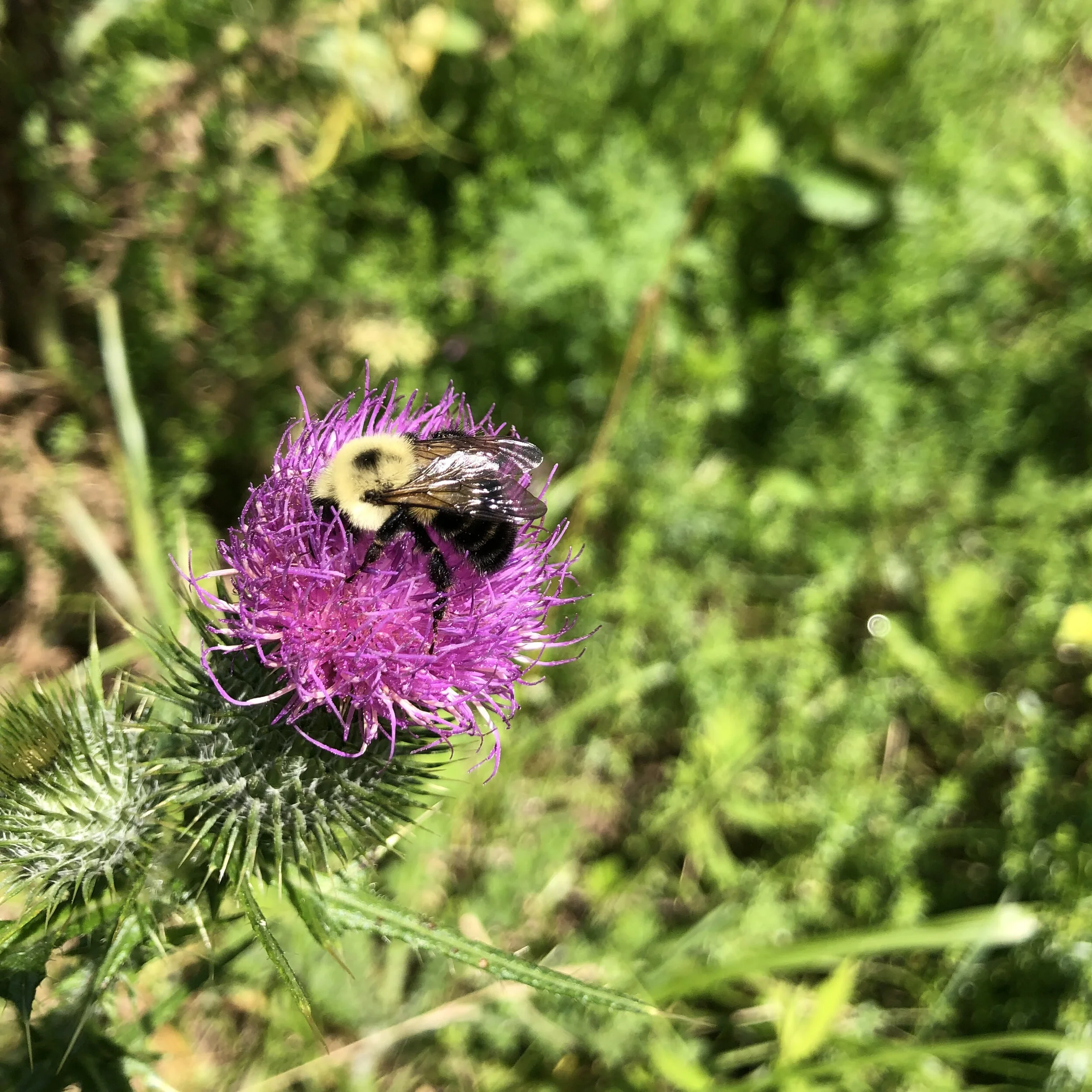
Right now, all our pollinators are in decline. Pesticides are a big factor. While honeybees are a big part of food crop pollination, bumblebees are hugely important pollinators in our ecosystems; they are helping plants reproduce. Plants and insects evolved together in a symbiotic relationship, where each is served.
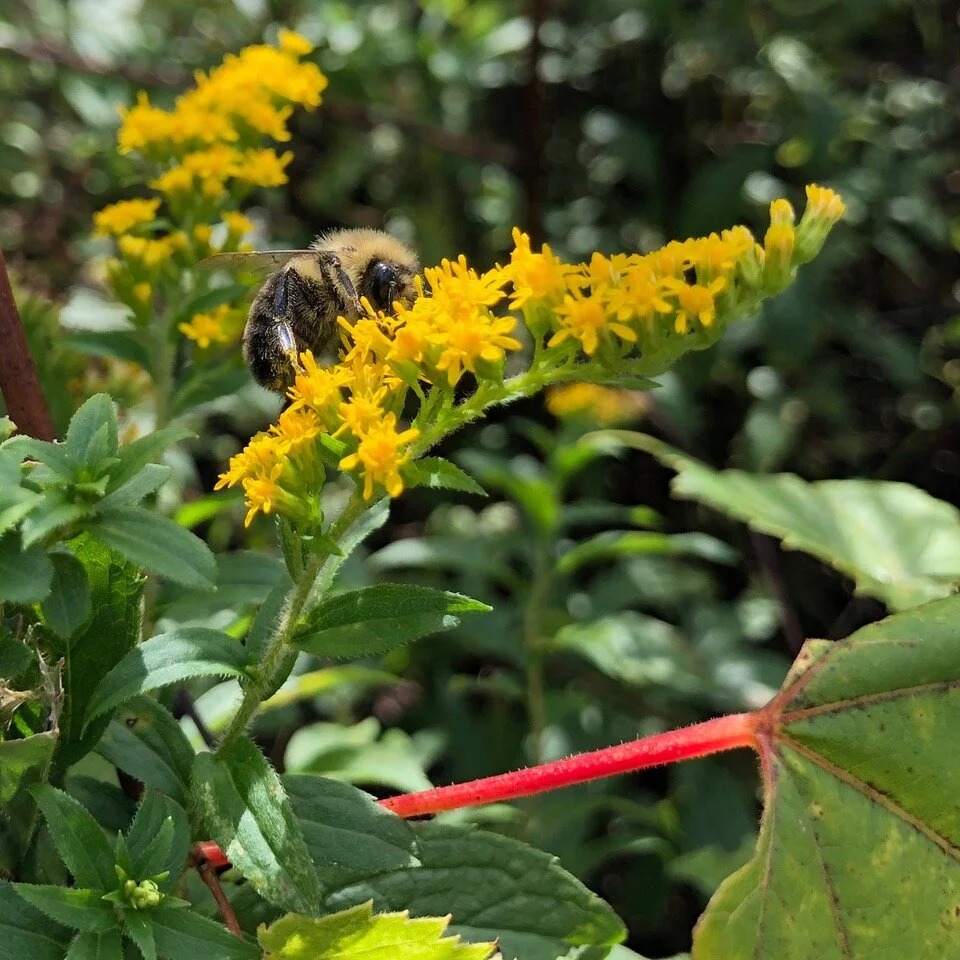
Suburban Ecology - Bee pollinating a plant
Of the hundreds of species of bombus (bumblebees), they can be categorized into three different tongue lengths. Why is this important? Well the long tongue bees are in most danger, so we should be thinking of plantings with tubular flowers so they can get the nectar they need, and different plants for their pollen. (See Beecology Project here - https://beecology.wpi.edu/website/home).
Suburban Ecology - Your Yard
So back to your yard. Think of it as a mini ecosystem, and what you can do to enhance it. It will reward you in spades, I promise. Planting more natives is a good place to start.
With 75 million suburban homes in the United States (146,000 in Morris County), imagine what would happen if every homeowner did just one or two things to make their landscapes more diverse. Suburban ecology. Let’s do more.
If you have any questions or anything to add about suburban ecology please comment below. I would love to hear!
Carolle
Keep up-to-date with my garden and projects on Instagram

My Tips For Preparing Your Garden For Winter; Do Less!
Fall. The beginning of the end of my gardening season. Time for fall clean up and start preparing my garden for winter. Now days I clean up a lot less and I’m asking you to do the same when preparing your garden for winter (or a lot less where you can). By leaving those perennial and grass seed heads alone, you are providing the birds much needed food in winter.
Fall. The beginning of the end of my gardening season. Time for fall clean up and start preparing my garden for winter. Its been dry the last few weeks and my husband Max is pointing out that some plants are looking sad. He helps by pointing these things out, but not actually helping. In the past I’d go out and ‘clean up’ my garden; cut back all the perennials and grasses, rake all the leaves and debris out of beds and drag them to the street for the town to pick up. While doing this made me feel accomplished and my garden look well groomed, I was not doing great by our small insect friends, birds or even the soil.
Preparing Your Garden For Winter
We are in a global crisis of insect species loss, due to many factors. This loss of an important food source for birds is now having a huge impact on bird populations. And scientists are worried about the loss of pollinators, as insects decline.
Nowadays I clean up a lot less and I’m asking you to do the same when preparing your garden for winter (or a lot less where you can). By leaving those perennial and grass seed heads alone, you are providing the birds much needed food in winter. Coneflowers, coreopsis, beard tongue and sedum seeds are great food sources once they mature. Bluejays, cardinals and finches will stop by to feed, entertaining you with their antics. If I cut them back now I’d be taking a meal away.
Garden Beds
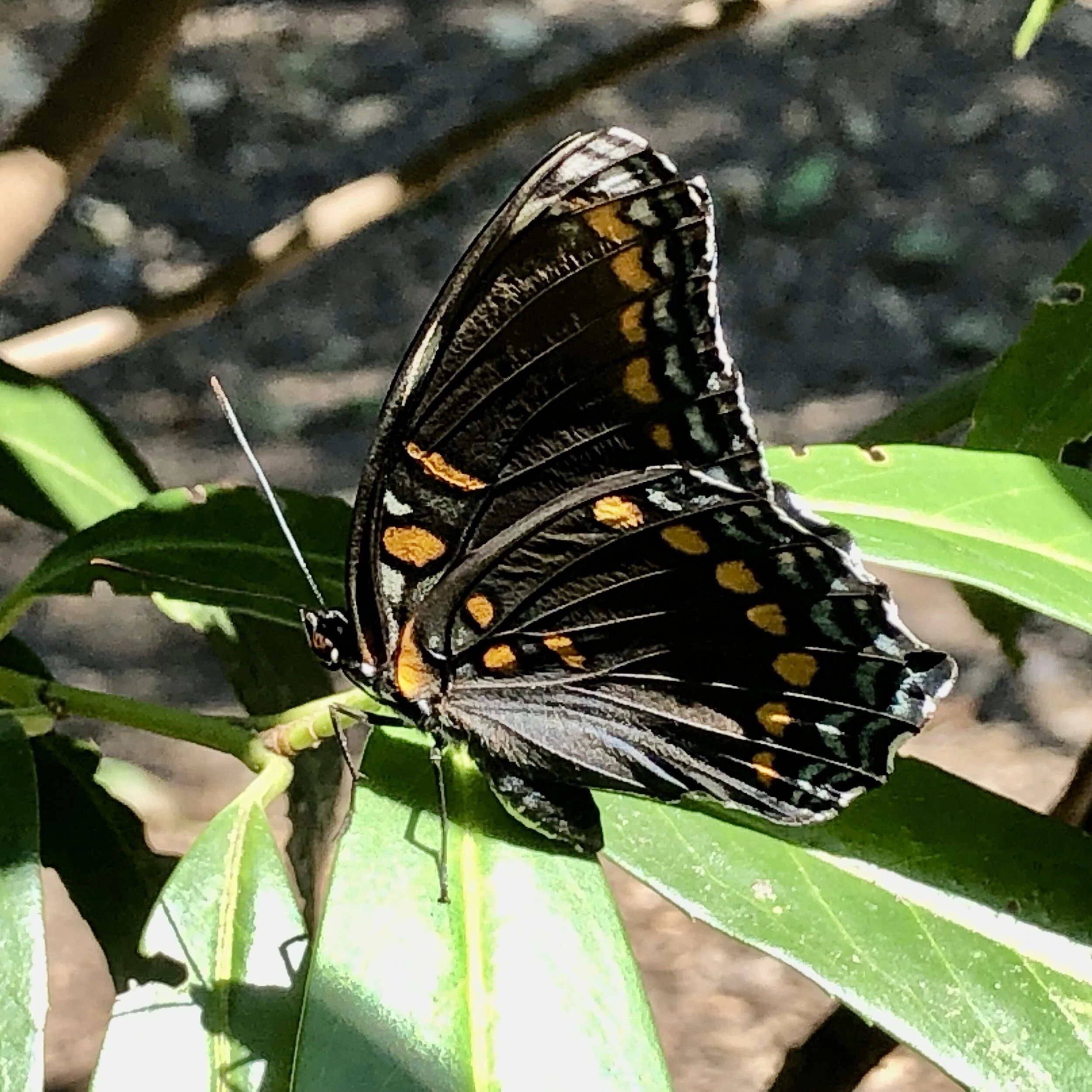
I don’t clean up the leaf litter in my beds either. Of course they can’t stay on my small patch of lawn all winter. That would kill it, and make Max nuts. But in my garden beds I leave most alone. All that leaf litter is where beneficial insects overwinter. While monarchs migrate to Mexico, swallowtails stick around overwintering as pupa inside a chrysalis. Clean up too well and you are dooming them. Beneficial insects overwinter as larvae, eggs, or fully formed adults. These will hatch and mature before other bad bugs like aphids arrive, and they are your first line of defense against them. Ladybugs eat 50 aphids a day or 5,000 in a lifetime! Then overwinter in the leaves and mulch that I am leaving in place. Ground beetles, green lacewings and damsel bugs do the same. They can take care of slugs, whiteflies, mites and cabbage worms. And leave some of the late season weeds. The ubiquitous clearweed and stinging nettle are host plants to many butterflies, like the beautiful Red Admiral.
Leave the leaves is a good motto. Gardens can’t get enough organic matter; it feeds the soil which in turn feeds our plants. But we remove loads of organic matter from our property when we rake our leaves to the street, only to bring mulch in in the spring. Instead of continuing this perplexing cycle, rake your leaves into a big pile on your lawn and run your mower over them several times. Then rake the shredded leaves into your garden beds. This is a great winter mulch that is fluffy enough to protect many species.
Bees And Wasps
While frightening to some, bees and wasps are also essential to a healthy ecosystem. Most of our 4000 species of native bees; mason, sweat and bumble bees, are not interested in stinging you, but will pay you back big by being much more efficient pollinators than the honey bees that Max keeps. Many hibernate in leaf piles, and a lot more in the ground. Leave the leaves. If you see a nest or hive, don’t be so quick to remove it, unless of course it is too close for comfort, but even paper wasps are beneficial. This group of insects is incredibly important to our food supply. No bees, no food, no kidding.
Birds
Another reason to care about insects is birds. While adult chickadees feed mostly on seeds, they feed their chicks almost exclusively caterpillars. If there are not enough caterpillars they cannot reproduce. So cleaning up too well can rid them of a huge food source.
Preparing Your Garden For Winter - To Round It Up
If the idea of a ‘messy’ garden does not sit well with you, pick one bed, less visible from your window and dedicate that to mess. I call this grateful exchange. It’s where you trade in your compulsive garden habits for a bit of ecosystem services that it will provide to you. So when preparing your garden for winter leave the fall clean up till spring, and help out some bugs that will help you out later; grateful exchange.
If you have any questions or anything to add about preparing your garden for winter please comment below. I would love to hear!
Learn more about me Carolle Huber and the sustainable landscapes that I design here.
Carolle
Keep up-to-date with my garden and projects on Instagram

Exotic Invasives & Deer - How They Are Changing Ecosystems In New Jersey
There are plants you should never purchase or plant, exotic invasives are one of them. Japanese Barberry and Burning Bush are some in my New Jersey area that are causing damage. These plants should never be sold either, but they are still staples in some nurseries.
Exotic Invasives In New Jersey
There are plants you should never purchase or plant, exotic invasives are one of them. Japanese Barberry and Burning Bush are some in my New Jersey area that are causing damage. These plants should never be sold either, but they are still staples in some nurseries. Japanese Barberry is an ‘exotic invasive’. Exotic, because it comes from a far away country. Invasive because it spreads rapidly because of a lack of predators. In New Jersey, it has taken over many parts of our woods. Japanese Barberry is thorny, so the deer don’t it eat. It also has berries that the birds like. So in the fall, the birds eat the berries. The acid in their stomachs breaks down the outer coating. Then the seed gets pooped out as the birds are flying, and they germinate everywhere. The reason they are able to grow is because the deer have eaten all the native plants; perennials, shrubs and small trees. This has left bare places for this exotic invasive plant to exploit. And it does it well. I walk my dog in the small woods near my home every morning. 30 years ago it was a diverse woods. There were many species of trees, mostly birch, beach and oak. The understory was also diverse with viburnum, chokeberry, witch hazel and azaleas. Today most of the native understory has been eaten by an out of control deer population, and in its place has grown, you guessed it, exotic invasives. Japanese Barberry, Japanese Knotweed and Burning Bush, from Asia. Believe it or not, these were all brought here on purpose as ornamental plants for use in our gardens, back in the 1800’s. Even then, while they might have escaped into our woods, they did not thrive or survive. There was too much competition from our native plants. What happened? Deer.

Exotic Invasives & Deer - How They Are Changing Ecosystems In New Jersey - Walking My Dog In The Small Woods Near My Home
Deer, Exotic Invasives & Changing Ecosystems
People assume we caused the deer problem by developing the woods where they lived, thus reducing their habitats and forcing them into suburbia. The truth is, all that development has been great for the deer. They thrive on it. They live on the edges of the forests, and by carving out the forests to build homes, we have created many more ‘edges’. Then we landscaped our yards with their favorite foods. Much of our woods have passed the tipping point. There are no new trees growing to replace all the old ones that are aging out or we’ve lost in recent storms. They get eaten before they are tall enough to survive. The natives have been decimated, and with their disappearance, the rest of the eco system is changing too.
Now the ecosystem starts to shift. The insect populations that depend on the native shrubs disappear. The birds and rodents that survived on these insects move on. The hope is that these creatures will adapt to the new ‘normal’ but the evidence is not in.
These plants have been banned from the nursery trade for several years in Connecticut and Massachusetts. More recently New York state has banned them too. My home state of NJ has been talking about it for years but has not made a move yet. Why? I suspect its the nursery trade. People say they use Japanese barberry because it is the only plant that has great red color that the deer won’t eat.
Great Alternatives To The Exotic Invasives
I say, plant Sambucus. Gardeners plant burning bush, Euonymous alatus for its brilliant red fall color. You see it in mass in corporate parking lots. Well the native fragrant Sumac, Rhus aromatica, will give you the same great color, and also become habitat and food for important pollinators like bees, small mammals and birds. As will sweetshrub and blueberries. There are always alternatives to replace these exotic invasive plant species.

A Euonymous alatus (Burning Bush)- Exotic Invasives & Deer - How They Are Changing Ecosystems In New Jersey
The Purple Loosestrife In New Jersey
Years ago, when I learned of the destruction that Purple Loosestrife was causing in my NJ wetlands, and that New York State spend approximately 45 million every year trying to rid itself of this plant, I thought it would be hard to stop using it. It has great purple flowers and blooms for a long long time. Well its been 20 years, and I have never used it and in fact have found myself pulling it out of gardens and fields whenever I see it.

The Purple Loosestrife - Exotic Invasives & Deer - How They Are Changing Ecosystems In New Jersey
It is simple, you would not ingest a dangerous substance, or feed it to your family. Don’t plant anything on your States Exotic Invasive plant list.
If you have any questions or anything to add about exotic invasives please comment below. I would love to hear!
You can also see how I deliver sustainability in home landscapes here.
Carolle
Keep up-to-date with my garden and projects on Instagram

Why Keep Bees? The Benefits Are Endless
Why keep bees? Well the more you know about bees and colony life the more amazing you will find them. They get most of their resources from flowers so as a result, the colony follows the life cycle of flowering plants. In spring they build up their work force by hatching babies. In the summer when flowers are most abundant they ramp up resource collection and are most active.
Amazing Bees
Why keep bees? Well the more you know about bees and colony life the more amazing you will find them. They get most of their resources from flowers so as a result, the colony follows the life cycle of flowering plants. In spring they build up their work force by hatching babies. In the summer when flowers are most abundant they ramp up resource collection and are most active. In fall, they slow down as temps get cooler and flowers are less available. They kick out the drones, or males, at the end of the season so they don’t have to share honey over the winter, thus ensuring enough for the queen and her girls.

Why Keep Bees? - A Bee Pollinating A Flower In My Back Yard
The Hive
Hives have a single queen. She is larger. Her job is to lay eggs. A working hive can get up to 60,000 strong. If supplies are plentiful, the hive may swarm. Swarming is half the hive plus the queen leaving for a new home. They usually leave the hive, gather on a high branch or side of a building and form a bee ball. They send out scouts to look for a new place to live. While they are swarming, they are not dangerous, as they have no honey to protect. They will usually be gone in 2 days. The remaining bees grow a new queen by simply changing the position of the larva in a cell and feeding her royal jelly.


Why We Should Keep Bees
Bees will travel up to 2 miles away for pollen and nectar. In return for this, the flowers get pollinated. Bees, along with other pollinators pollinate more than 33% of the food we eat. They help all plants reproduce, not just food crops which is another great reason why keeping bees is so important. But bee populations are in danger. There is not one cause, but many. For bees, it is pesticide poisoning from local field crops and home gardens, a parasitic Varroa mite, the single-crop planting of most large farms now days, and climate change, which disrupts the timing between bees and bloom.
One way to help is to keep bees. Watching these amazing creatures is not only educational, but also humbling and rewarding. Honey is just a bonus (also wax, propolis, pollen and Royal jelly). Another way to help is to support local pollinator populations by by planting diverse plants in your garden, with flowers from early spring; silver maple and pussy willows, to late fall; asters and dahlias.
You can read more about my garden and the sustainable landscapes that I design by clicking the text links.
If you have any questions or comments to add, I would love to hear so please do so just below.
Carolle
Keep up-to-date with my garden and projects on Instagram